

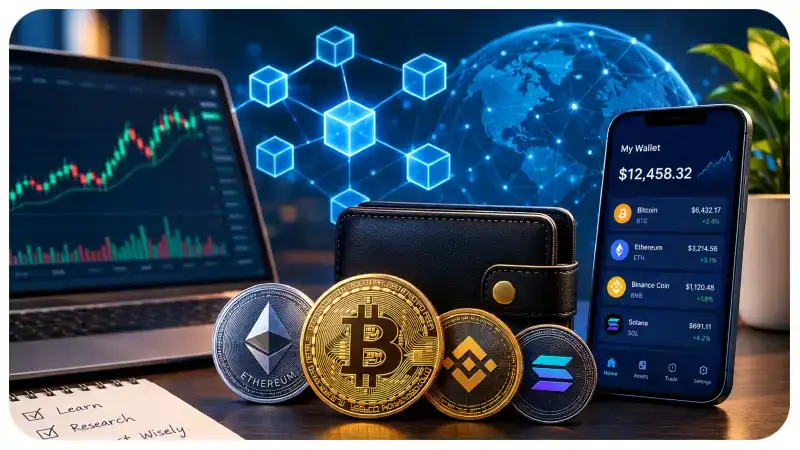
Introduction to business robthecoins
The world of digital finance is evolving rapidly, and cryptocurrency has become an important topic for investors, technology enthusiasts, and everyday internet users. As more people explore blockchain technology and digital assets, the demand for reliable, easy-to-understand information continues to grow. RobTheCoins is a keyword that can serve as a starting point for readers interested in cryptocurrency education, blockchain developments, digital finance, and crypto market trends.
Understanding cryptocurrency does not require an advanced technical background. However, learning the fundamentals is essential before making decisions involving digital assets. From understanding how blockchain works to recognizing common investment risks, having the right information can help readers navigate the crypto ecosystem more confidently.
In this guide, we will explore cryptocurrency basics, blockchain technology, digital wallets, crypto security, market research, and responsible investing. Whether you are a beginner or someone looking to expand your knowledge, this article provides a practical overview of the digital currency landscape.
What Is RobTheCoins?
RobTheCoins is a keyword associated with the broader topic of cryptocurrency and digital assets. People searching for this term may be interested in crypto education, blockchain information, market analysis, or online resources related to digital finance.
Before relying on any website, platform, or service using the RobTheCoins name, readers should verify its official identity, available features, ownership information, and reputation. A keyword alone does not establish that a particular service is legitimate, regulated, or financially trustworthy.
For readers interested in cryptocurrency, the most valuable starting point is understanding the technology behind digital currencies and learning how to evaluate information carefully.
A useful cryptocurrency resource should explain complex concepts in simple language, distinguish facts from opinions, discuss potential risks, and encourage readers to conduct independent research before making financial decisions.
Understanding Cryptocurrency and Digital Assets
Cryptocurrency is a type of digital asset that can use cryptographic techniques and distributed ledger technology to support transactions and maintain records. Unlike traditional currencies issued by central banks, many cryptocurrencies operate through decentralized networks.
Bitcoin and Ethereum are two well-known examples, although they serve different purposes. Bitcoin was designed primarily as a peer-to-peer electronic payment system and is often discussed as a potential store of value. Ethereum supports smart contracts and decentralized applications in addition to its native cryptocurrency, Ether.
Cryptocurrencies can be transferred between compatible wallets without necessarily requiring a traditional bank to process every transaction. However, users may still depend on exchanges, payment providers, or other intermediaries to purchase, sell, or manage digital assets.
It is important to remember that cryptocurrency prices can change dramatically. Some projects have limited liquidity, unclear business models, or significant technical weaknesses. Understanding these factors is essential before participating in the market.
How Blockchain Technology Works
Blockchain is a type of distributed ledger that records information across a network of computers. Transactions are grouped into blocks, which are linked together using cryptographic methods. Depending on the network, participants use different consensus mechanisms to agree on the validity and ordering of transactions.
One of the main benefits of blockchain technology is that it can allow multiple participants to verify records without relying entirely on a single central database administrator.
Several important features help explain how blockchain works:
Transparency: Some public blockchains allow anyone to inspect transaction records using a block explorer.
Security: Cryptographic methods and network consensus help protect transaction records, although no technology is completely free from vulnerabilities.
Decentralization: Many blockchain networks distribute responsibilities across multiple participants rather than depending on one central authority.
Traceability: Transactions recorded on public blockchains can often be followed from one address to another.
Blockchain technology also has limitations. Transaction fees, network congestion, energy consumption, scalability, and privacy concerns vary between systems. Furthermore, a transaction being visible on a blockchain does not automatically prove that the underlying project is trustworthy.
Popular Types of Cryptocurrencies
The cryptocurrency market contains thousands of digital assets. Understanding their different purposes can help beginners avoid treating every token as the same type of investment.
1. Bitcoin
Bitcoin is the first widely adopted cryptocurrency. It operates on a decentralized network and has a predetermined maximum supply of 21 million coins. Investors and researchers frequently discuss Bitcoin in relation to digital scarcity, monetary systems, and long-term asset allocation.
However, Bitcoin remains volatile and can experience substantial price declines.
2. Ethereum
Ethereum is a blockchain platform that supports programmable smart contracts. Developers use it to build decentralized applications, token systems, and various blockchain-based services.
Ether, commonly represented by ETH, is the native asset used within the Ethereum ecosystem, including for transaction fees and network participation.
3. Stablecoins
Stablecoins are designed to maintain a relatively stable value, often by referencing a currency such as the US dollar. Their stability depends on the design of the token, the quality of its reserves where applicable, redemption arrangements, and the reliability of the issuer or protocol.
Stablecoins can still involve counterparty, liquidity, regulatory, and technical risks.
4. Utility Tokens
Utility tokens may provide access to particular products, services, or features within a blockchain ecosystem. Their usefulness depends on the project’s actual adoption, technical design, and long-term sustainability.
A token’s advertised purpose does not guarantee demand or future market value.
The Importance of Crypto Wallets
A cryptocurrency wallet helps users manage their blockchain addresses and the cryptographic keys needed to authorize transactions. Some wallets are software applications, while others use dedicated hardware devices.
There are two common wallet categories.
Hot wallets: These wallets connect to the internet and are generally convenient for frequent transactions. Examples include mobile, desktop, and browser-based wallets. Their online accessibility can increase exposure to phishing, malware, and account compromise.
Cold wallets: These keep private keys offline or use an offline signing process. Hardware wallets are a common example. They can reduce certain online risks, but they still require careful setup, storage, and transaction verification.
Wallet users should protect their recovery phrases and private keys. Anyone who obtains the necessary recovery information may be able to control the associated assets.
Never share a recovery phrase with someone claiming to offer technical support. Avoid storing it in unsecured cloud documents, email accounts, or ordinary screenshots. Always verify wallet addresses and transaction details before approving transfers.
How to Research Cryptocurrency Projects
Research is one of the most important habits for anyone exploring digital assets. Social media popularity and dramatic price movements do not necessarily indicate that a cryptocurrency project has long-term value.
Before evaluating a project, consider these factors:
Project purpose: Identify the problem the project aims to solve and determine whether blockchain technology is genuinely useful for that purpose.
Development activity: Review public documentation, software repositories where available, technical updates, and evidence of ongoing development.
Token economics: Examine the token supply, distribution, unlock schedules, incentives, and the concentration of holdings.
Security audits: Look for independent security assessments and investigate whether identified vulnerabilities have been addressed. An audit reduces uncertainty but does not guarantee safety.
Community quality: Consider whether discussions focus on technology, product development, and meaningful questions rather than only price predictions and promotional messages.
Regulatory considerations: Check whether the project or service complies with relevant rules in your jurisdiction and whether its activities require authorization.
A careful evaluation should consider both potential benefits and possible failure scenarios. Avoid making decisions based solely on anonymous recommendations, influencer promotions, or promises of guaranteed profits.
Cryptocurrency Market Trends and Price Volatility
Cryptocurrency prices can be influenced by several factors, including supply and demand, economic conditions, regulatory announcements, technological developments, market liquidity, and investor sentiment.
News about exchange-traded products, institutional participation, network upgrades, or government policy can influence market expectations. However, the impact of an announcement is not always predictable, and positive news does not guarantee rising prices.
Market volatility creates opportunities for price movements in both directions, but it also increases the possibility of substantial losses.
Beginners should understand the difference between investing and short-term trading. Investing generally involves a longer time horizon and a broader assessment of an asset’s fundamentals. Trading involves more frequent buying and selling and may require technical analysis, risk controls, and significant time.
Neither approach guarantees success. Leverage can amplify losses and may result in liquidation, making it particularly risky for inexperienced participants.
Common Cryptocurrency Scams to Avoid
As cryptocurrency adoption grows, scammers continue to use increasingly convincing methods to target users. Recognizing warning signs can help protect both personal information and digital assets.
Guaranteed returns: Any service promising risk-free profits or fixed, unusually high returns should be treated with extreme caution.
Fake giveaways: Fraudsters may claim that sending cryptocurrency will unlock a larger payment. Legitimate giveaways do not require users to send funds to receive promised rewards.
Phishing websites: Fake websites can imitate exchanges, wallets, and well-known crypto brands to steal login information or recovery phrases.
Impersonation scams: Someone may pretend to be a company representative, developer, celebrity, or support agent to gain access to a victim’s assets.
Rug pulls: Some projects attract buyers and then have their creators withdraw liquidity or abandon the project, leaving token holders with substantial losses.
To reduce these risks, use official websites, enable multifactor authentication where available, verify website addresses, and never approve unfamiliar wallet transactions without understanding their consequences.
The Future of Cryptocurrency and Digital Finance
Cryptocurrency and blockchain technology continue to develop, with potential applications in payments, tokenization, decentralized finance, digital identity, and cross-border transactions.
Tokenization involves representing certain assets or rights as digital tokens on a blockchain. Depending on the legal structure and implementation, this may help support new approaches to ownership records, settlement, and financial services.
Decentralized finance, commonly called DeFi, uses blockchain-based applications to provide services such as lending, borrowing, and exchanging digital assets. These applications can offer new forms of access but also introduce smart contract vulnerabilities, liquidity risks, and complex financial incentives.
The future of digital assets will depend on several factors, including practical adoption, user experience, security, regulation, scalability, and public trust.
It is unlikely that every cryptocurrency project will succeed. Some technologies may become more useful over time, while others may lose adoption or disappear. Readers should therefore evaluate individual projects rather than assuming the entire market will grow at the same rate.
Why Reliable Cryptocurrency Education Matters
Reliable education helps people distinguish between technological innovation and speculative marketing. For anyone exploring RobTheCoins as a cryptocurrency-related search term, the priority should be finding accurate explanations, transparent information, and practical security guidance.
A trustworthy informational resource should avoid misleading claims, clearly identify sponsored material, update outdated information, and explain uncertainty when discussing market developments.
Readers can strengthen their knowledge by studying blockchain fundamentals, comparing multiple independent sources, understanding wallet security, and learning about relevant financial regulations.
It is equally important to recognize personal financial limits. Cryptocurrency should not be treated as a guaranteed path to wealth, and money needed for essential expenses should not be exposed to highly volatile investments.
Frequently Asked Questions About RobTheCoins
What is RobTheCoins?
RobTheCoins is a search keyword that may relate to cryptocurrency, blockchain technology, or digital finance. The exact nature of any website or business using this name should be verified through reliable, official sources.
Is cryptocurrency suitable for beginners?
Beginners can learn about cryptocurrency, but buying digital assets involves risks. Understanding blockchain technology, wallet security, volatility, and scams is important before making financial decisions.
How can I protect my cryptocurrency?
Use reputable wallets, secure your recovery phrase offline, enable available security protections, verify transaction details, and avoid sharing private keys or recovery information.
Can cryptocurrency guarantee profits?
No. Cryptocurrency investments are speculative and can result in substantial or total losses. Claims of guaranteed profits are a major warning sign.
How can I evaluate a crypto project?
Research its purpose, team disclosures, technology, token distribution, security assessments, liquidity, and regulatory position. Compare information from multiple independent sources.
Is blockchain the same as cryptocurrency?
No. Blockchain is a technology for maintaining distributed records, while cryptocurrency is one possible application of blockchain and related cryptographic systems.
Conclusion
RobTheCoins provides a useful keyword around which to explore cryptocurrency education, blockchain technology, digital wallets, market research, and online financial safety. Understanding these subjects can help readers make more informed decisions in an increasingly digital financial environment.
The most effective approach is to focus on education, independent verification, and responsible risk management. Cryptocurrency technology offers interesting possibilities, but it also presents technical, financial, and regulatory challenges.
Whether you are researching Bitcoin, learning about Ethereum, exploring decentralized finance, or comparing digital asset platforms, prioritize trustworthy information over hype. With a solid understanding of the fundamentals, readers can better evaluate opportunities, recognize warning signs, and approach the evolving cryptocurrency landscape with greater confidence.














Leave a Reply