

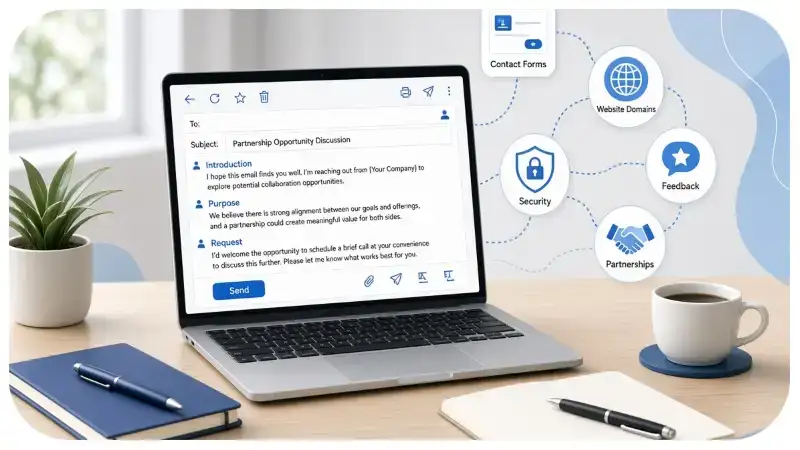
If you are searching for email logicalshout, you may be looking for a reliable way to contact LogicalShout, ask about published content, share feedback, or discuss a possible business opportunity. The phrase can be confusing because websites with similar names may appear in search results.
This guide explains email logicalshout in simple terms and focuses on what readers actually need: finding the correct contact channel, preparing a useful message, protecting personal information, and avoiding common mistakes when contacting a website.
What Does Email LogicalShout Mean?
“Email LogicalShout” is generally a search phrase connected with contacting a website or publication called LogicalShout. It is not the name of a widely recognized email application such as Gmail, Outlook, or Yahoo Mail.
People searching this term may have different goals. Some want to ask a question about an article, while others may be interested in content contributions, advertising, partnerships, or website feedback.
Because similar website names can exist online, identifying the exact LogicalShout website should always come before sending an email.
Why Are People Searching for Email LogicalShout?
There are several possible reasons someone may want to contact a LogicalShout website.
Common reasons include:
- Asking about published content
- Suggesting a correction
- Reporting a technical problem
- Sharing website feedback
- Discussing a content contribution
- Asking about advertising opportunities
- Proposing a business collaboration
- Requesting additional information
The purpose of the message determines how you should write it. A technical problem requires different information from a guest article proposal, for example.
Email LogicalShout: Finding the Correct Contact Information
Before sending a message, check the website you want to contact carefully. Look for a dedicated contact page, about page, or another official section that provides communication details.
Do not assume that every email address mentioning the LogicalShout name belongs to the same organization. Similar domain names can represent completely different websites.
Check the Website Domain
The domain should be your first point of reference.
For example, two websites may have very similar names while operating under different domains. Their editorial teams, owners, and contact addresses may not be connected.
Always confirm that the contact information belongs to the website you are actually trying to reach.
Look for Current Contact Details
Website information can change. An email address that appeared in an old article or directory listing may no longer be active.
For that reason, use the contact details displayed on the website itself whenever possible.
This is especially important for business inquiries, publishing requests, and other situations where your message needs to reach the right person.
How to Write a Professional LogicalShout Email
Once you have confirmed the correct contact address, focus on writing a short and useful message.
A good email usually answers three basic questions:
- Who are you?
- Why are you contacting the website?
- What would you like the recipient to do?
You do not need complicated language. Clear writing is usually more effective.
Choose a Clear Subject
Your subject line should explain the purpose of your email.
Instead of writing “Hello” or “Important Question,” use something more specific, such as:
- Content Correction Request
- Business Collaboration Inquiry
- Article Submission Proposal
- Website Feedback
- Advertising Inquiry
A descriptive subject helps the recipient understand your request before reading the entire message.
Introduce Yourself
Start with a short introduction. Mention your name and your role only when it helps explain your request.
For example, someone contacting the website about digital marketing could briefly mention that they work in SEO or content marketing.
There is no need to include a long professional biography in the opening email.
Explain Your Purpose
Get to the main point quickly.
If you are asking about an article, identify the article and explain your question. If you are proposing content, mention the topic and why it could be useful to the site’s readers.
Avoid sending a message that forces the recipient to guess what you want.
Explain the Next Step
Finish by making your request clear.
You might ask the recipient to:
- Confirm whether a topic is suitable
- Explain the submission process
- Review a proposal
- Correct a piece of information
- Provide additional details
A clear request makes the conversation easier to continue.
Email LogicalShout for Guest Posts and Partnerships
People working in content marketing or SEO may search for email logicalshout because they want to explore publishing or partnership opportunities.
A personalized approach is usually more useful than sending the same message to every website.
Before contacting a publication, look at its existing content. Identify subjects that fit its audience and prepare a proposal that matches those interests.
A useful outreach email can contain:
- Your name
- Your professional background
- A relevant topic idea
- A short explanation of the proposed article
- Examples of previous work, when appropriate
- A simple question about the next step
Keep the proposal focused. Sending dozens of unrelated topics can make the message look like a mass outreach campaign.
Make Your Proposal Relevant
Suppose you want to suggest an article about website optimization. Rather than simply asking, “Do you accept guest posts?” you could explain the specific topic you want to cover and the value it could provide to readers.
This gives the recipient something concrete to evaluate.
How to Report a Website Problem
If your reason for contacting LogicalShout is a technical or editorial issue, provide enough information for someone to reproduce the problem.
Useful details can include:
- Page title
- Page address
- Description of the issue
- Location of the problem on the page
- Screenshot, if necessary
For example, saying “there is a broken link” is less helpful than explaining which page contains the link and what happens when you select it.
Specific information can save time during the review process.
Protect Your Information When Using Email
Email is useful, but you should still be careful about what information you share.
Never send sensitive credentials simply because a message requests them. This includes passwords, login codes, banking information, payment credentials, and private account details.
For normal website inquiries, you generally only need to provide information related to your request.
Be Careful With Unexpected Messages
A message can use a familiar company or website name without actually coming from that organization.
Before responding to an unexpected email, examine the sender address and compare it with the contact information published on the relevant website.
Be especially cautious when a message:
- Creates unnecessary urgency
- Requests payment
- Asks for login credentials
- Requests a verification code
- Includes an unexpected attachment
- Directs you to an unfamiliar website
If something seems suspicious, verify the information independently rather than relying on the message itself.
Common Email Mistakes to Avoid
A few simple mistakes can make an otherwise legitimate inquiry less effective.
1. Writing Too Much
Long emails can hide the main point. Include the information the recipient needs and remove unrelated details.
2. Using an Unclear Subject
A vague subject gives the recipient little information about your request.
3. Sending Repeated Messages
If you do not receive an immediate answer, avoid sending multiple follow-ups close together. Give the recipient reasonable time to respond.
4. Using the Same Message Everywhere
A generic message may not demonstrate that you understand the website or its audience.
Personalize the most important parts of your inquiry.
5. Sharing Unnecessary Personal Details
Your email should contain enough information to handle the request, but there is no reason to disclose sensitive or private information unnecessarily.
What Should You Expect After Sending an Email?
There is no universal response time for website inquiries. Different organizations have different schedules, workloads, and communication practices.
A simple question may receive a different response time than a business proposal or content request.
If you need to follow up, keep the second message short. You can refer to the original email and politely ask whether the recipient has had an opportunity to review it.
Keeping a copy of your original message is also useful because it allows you to provide the exact context if further communication is needed.
For more information, visit our site daily.












Leave a Reply